Understanding AI in Art Creation
In recent years, artificial intelligence (AI) has made significant inroads into various sectors, and art creation is no exception. With advancements in machine learning and image processing, artists and enthusiasts alike are using affordable AI abstract art generators to explore new creative avenues. These tools enable users to generate unique art pieces from mere text prompts or existing images, democratizing art creation for both seasoned artists and novices. When exploring options, affordable AI abstract art generator provide comprehensive insights into the capabilities of modern AI technology in the artistic landscape.
What is an Affordable AI Abstract Art Generator?
An affordable AI abstract art generator is a tool that uses machine learning algorithms to create abstract artwork from user inputs such as text descriptions or existing images. These generators often come with various features that allow customization, enabling users to modify styles, colors, and techniques to suit their artistic vision. The affordability aspect makes these tools accessible to a broader audience, fostering creativity without the hefty price tag of traditional art supplies or formal education.
The Technology Behind AI Art Generation
At the core of AI art generation is deep learning, a subset of machine learning that uses neural networks to analyze and create images. These generators are trained on vast datasets of existing art, allowing them to understand various artistic styles and techniques. For instance, convolutional neural networks (CNNs) play a crucial role in recognizing patterns in images, which helps in generating new content that emulates specific artistic styles. With advancements in natural language processing (NLP), many of these tools can also transform text prompts into visually striking artworks, making it easier for anyone to create art without needing prior artistic skills.
Benefits of Using AI for Art Creation
- Accessibility: Affordable AI abstract art generators make it possible for everyone, regardless of their artistic background, to create unique artworks.
- Time Efficiency: These tools can produce artwork in a fraction of the time it would take to create manually, allowing artists to focus on other aspects of their creative process.
- Inspiration: Many artists use AI-generated art as a source of inspiration, allowing them to explore new styles or ideas that they might not have considered before.
- Cost-Effective: Compared to purchasing traditional art supplies or hiring professional artists, using AI tools is often much more affordable.
How to Choose the Right AI Art Generator
Key Features to Look For
When selecting an AI art generator, there are several key features to consider that can greatly affect your creative experience:
- User Interface: Look for a generator with an intuitive interface that allows easy navigation and quick access to features.
- Customization Options: A good generator should allow users to customize styles, colors, and textures to create unique art pieces.
- Quality of Output: Evaluate the quality of the generated images. Some generators produce high-resolution images suitable for prints, while others may provide lower-quality outputs.
- Community and Resources: A supportive community can enhance your experience, offering feedback, tips, and inspiration. Look for generators that provide access to tutorials, forums, or social media groups.
Comparing Different Generators
With numerous AI abstract art generators available in the market, comparing features, pricing, and functionalities is crucial. Popular choices include:
- OpenArt: Known for its user-friendly interface and diverse style options, it allows users to generate art quickly.
- DeepAI: Offers a range of pricing for different resolutions, providing flexibility based on user needs.
- Canva: While primarily a design tool, it includes an AI art generator that integrates well with its other features.
- NightCafe Studio: A community-based platform offering unique tools and features tailored for abstract art creation.
Cost-Effective Options for Artists
For artists on a tight budget, several generators provide free or low-cost options. Tools like LightX and Adobe Firefly offer essential features without significant fees. Moreover, many platforms provide subscriptions or credits, allowing artists to choose a payment model that fits their needs. It’s essential to review user experiences and sample outputs to determine which option offers the best value.
Getting Started with Your Affordable AI Abstract Art Generator
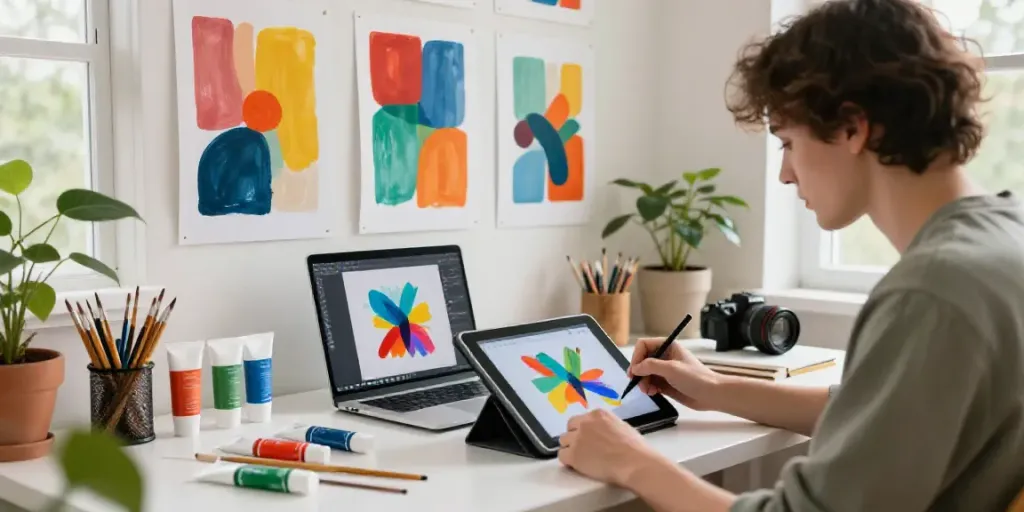
Setting Up Your Workspace
To begin your journey into AI art creation, establishing a conducive workspace is crucial. Here are some tips to consider:
- Choose a Comfortable Environment: Ensure your workspace is free from distractions and promotes creativity.
- Digital Tools: A reliable computer or tablet with good processing power will enhance your experience, especially when generating high-resolution images.
- Software Installation: If the generator requires software or plugins, make sure you follow the installation steps carefully to avoid technical issues.
Basic Techniques for Effective Use
Once your workspace is set up, familiarize yourself with the generator’s functionalities. Start with simple prompts and gradually explore advanced features. Here are some basic techniques:
- Start Simple: Use straightforward text prompts to see how the generator interprets your inputs.
- Experiment: Don’t hesitate to experiment with various styles and colors. The beauty of AI art is the freedom to explore.
- Learn from Feedback: If the generator allows for adjustments based on feedback, use this feature to refine your artwork.
Common Beginner Mistakes to Avoid
When starting with an AI art generator, beginners often make mistakes that can hinder their creative progress. Here are some common pitfalls to avoid:
- Overlooking Customization Features: Many beginners overlook the various customization options available, which can lead to generic outputs.
- Ignoring Resolution Settings: Not paying attention to the resolution can result in low-quality images, especially if you plan to print your artwork.
- Focusing Too Much on Perfection: Embrace the creative process; not every output will be perfect, and that’s okay.
Advanced Techniques for Artistic Expression
Combining AI Art with Traditional Methods
Many artists find value in integrating AI-generated art with traditional techniques. Here are some ways to combine the two:
- Layering: Print AI-generated images and layer them with traditional painting or drawing techniques to create mixed-media pieces.
- Using AI as a Starting Point: Use AI-generated works as a foundation to develop further with traditional methods, enhancing your personal touch.
- Collaboration: Collaborate with other artists who use traditional methods to explore new avenues for creativity.
Creating Unique Styles and Themes
Developing a distinct artistic style is essential for any artist. AI tools can help establish unique themes through various means:
- Prompt Engineering: Experiment with specific, descriptive prompts to guide the generator towards producing art that aligns with your desired theme.
- Style Transfer: Some generators allow users to apply the style of famous artists to their creations, providing an opportunity to explore classical themes with a modern twist.
- Series Creation: Create a series of works based on a single theme, using the generator to provide consistency while allowing for varied interpretations.
Exploring Different Mediums with AI
AI-generated art isn’t limited to just digital formats; many artists are exploring how these creations can be translated into various physical mediums:
- Prints: Use high-quality prints of AI-generated art to create posters or canvases that can be sold or displayed.
- Textiles: Consider using AI art designs on fabrics for clothing or home decor, integrating art into everyday life.
- Augmented Reality: Explore how AI art can be transformed into immersive experiences through AR, allowing viewers to engage with the artwork in unique ways.
The Future of AI Art Generation in 2026 and Beyond
Emerging Trends and Technologies
The world of AI art generation is constantly evolving. As we move towards 2026, several trends and technologies are expected to shape its future:
- Improved Algorithms: Continued advancements in machine learning will enhance the quality and variety of AI-generated art.
- Greater Accessibility: As technology becomes more affordable, expect an increase in tools that allow even more users to engage with AI art generation.
- Interdisciplinary Collaboration: Artists from diverse fields will increasingly collaborate with technologists to create innovative artistic experiences.
Impact of AI on the Art Community
As AI becomes more integrated into the artistic process, its impact on the art community will be profound:
- Redefining Creativity: The definition of what it means to create art is evolving as artists leverage AI tools alongside their own creativity.
- New Art Forms: We will likely see the emergence of entirely new art forms that blend traditional methods with AI technology.
- Market Changes: The art market may shift as AI-generated art gains recognition, leading to new opportunities and challenges for traditional artists.
Predictions for AI Art Generators by 2026
Looking ahead, we can anticipate several key developments for AI art generators in the coming years:
- Increased Personalization: Expect generators to offer more personalized experiences, tailoring outputs based on individual user preferences.
- Integration with Social Media: AI tools will likely integrate better with social platforms, allowing for seamless sharing of artistic creations.
- Ethical Considerations: Conversations around copyright and the ethical implications of AI-generated art will become more pronounced, influencing how these technologies are used.